
Key Points
If there is one phrase that every crypto investor must tattoo on their brain, it is this: “Not your keys, not your coins.”
In my ten years of tracking market cycles, the most heartbreaking stories I’ve covered aren’t about price crashes – they’re about people losing access to their crypto stashes because they didn’t know how to store them safely.
A “wallet” in the crypto world isn’t a leather pouch for your bills; it’s a sophisticated piece of software or hardware that manages your digital signatures.
As cryptos turn seventeen years old, existing solutions have become more user-friendly. However, you are still entirely responsible for keeping your assets safe.
Hot Wallets vs. Cold Wallets
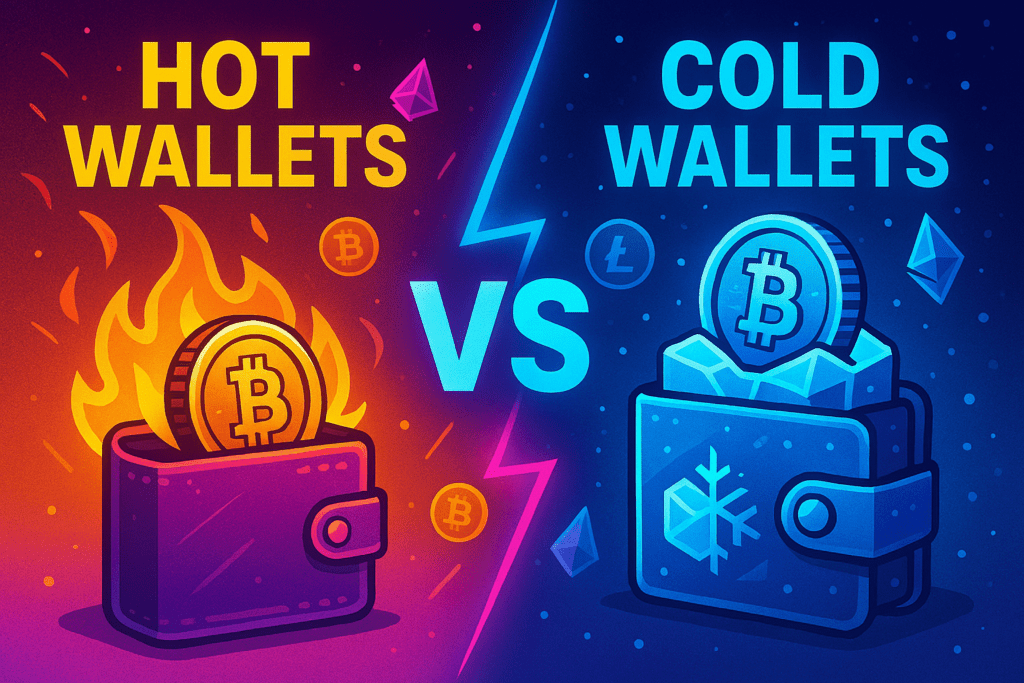
Before picking a specific brand, you must decide on the type of security you need. I always recommend a “hybrid” approach: use a hot wallet for trading small amounts and a cold wallet for your long-term “HODL” positions.
Hot Wallets (Convenience & Speed)
Hot wallets are connected to the internet. They are usually free apps you download on your phone or web browser.
- Pros: Instant access to decentralized exchanges (DEXs), great for NFTs, and usually free.
- Cons: Vulnerable to malware, phishing attacks, and phone theft.
Top 2026 Picks
- MetaMask: The Ethereum standard to access DeFi apps.
- Exodus: Multichain wallet with a highly user-friendly interface and support for top blockchains like Bitcoin, Ethereum, Solana, BNB Chain, and Ripple.
- Phantom. Best wallet for Solana-based tokens like meme coins and second-tier altcoins like Sui (SUI) and Hyperliquid (HYPE).
Cold Wallets (The Fort Knox of Crypto)
Cold wallets (hardware wallets) are physical devices that keep your private keys offline.
- Pros: Virtually unhackable via the internet. Even if your computer has a virus, your coins will still be safe.
- Cons: They cost money ($50–$250) and are slightly less convenient for daily trading.
Top 2026 Picks
- Ledger Nano Flex (buy here) and the Trezor Safe 7.
Comparison: The Best Wallets for Cryptocurrencies in 2026
| Wallet Name | Type | Best For | Key Feature in 2026 |
| MetaMask | Hot (Software) | DeFi & Web3 Power Users | Built-in “Smart Swaps” & Mastercard Integration |
| Trust Wallet | Hot (Mobile) | Beginners | Integrated Staking for 100+ assets |
| Exodus | Hot (Desktop) | Visual Portfolio Tracking | Best-in-class UI/UX for newcomers |
| Ledger Nano X | Cold (Hardware) | Long-term Security | Bluetooth mobile pairing & CC EAL6+ Chip |
| Trezor Safe 7 | Cold (Hardware) | Future-Proofing | Quantum-resistant architecture |
The “Seed Phrase” Survival Guide
When you set up any of these wallets, you will get 12 or 24 random words. This is your Seed Phrase.
A seed phrase allows you to get access to your private keys from other devices. Think of it as the combination to your safe box.
These are a few recommendations you could follow to keep your seed phrase away from thieves and hackers.
- Rule #1: Never store this in your email, a cloud drive, or a photo on your phone.
- Rule #2: Write it on paper (or better yet, engrave it in metal) and put it in a safe.
- Rule #3: If a website asks for your seed phrase, it is a scam. Stay away.
Conclusion: Matching Your Wallet to Your Needs
Exodus and Trust Wallet are great alternatives if you want multi-chain support to get your coins out of exchanges.
Meanwhile, if you are an active trader flipping “meme coins” on Solana, Phantom is your best friend.
Finally, if you plan to invest more than $5,000 or are thinking of building a retirement fund in Bitcoin, a Trezor or Ledger is probably the best choice.
Take security seriously. If your wallet is hacked, you will not be able to recover your assets.