

Key Points
The evolution of decentralized finance (DeFi) has introduced a specialized vocabulary that can often feel like a barrier to entry for new investors.
Among all of these new terms like “composability” and “yield curve”, stability fees stand out as one of the most critical, yet misunderstood, components of the decentralized stablecoin ecosystem.
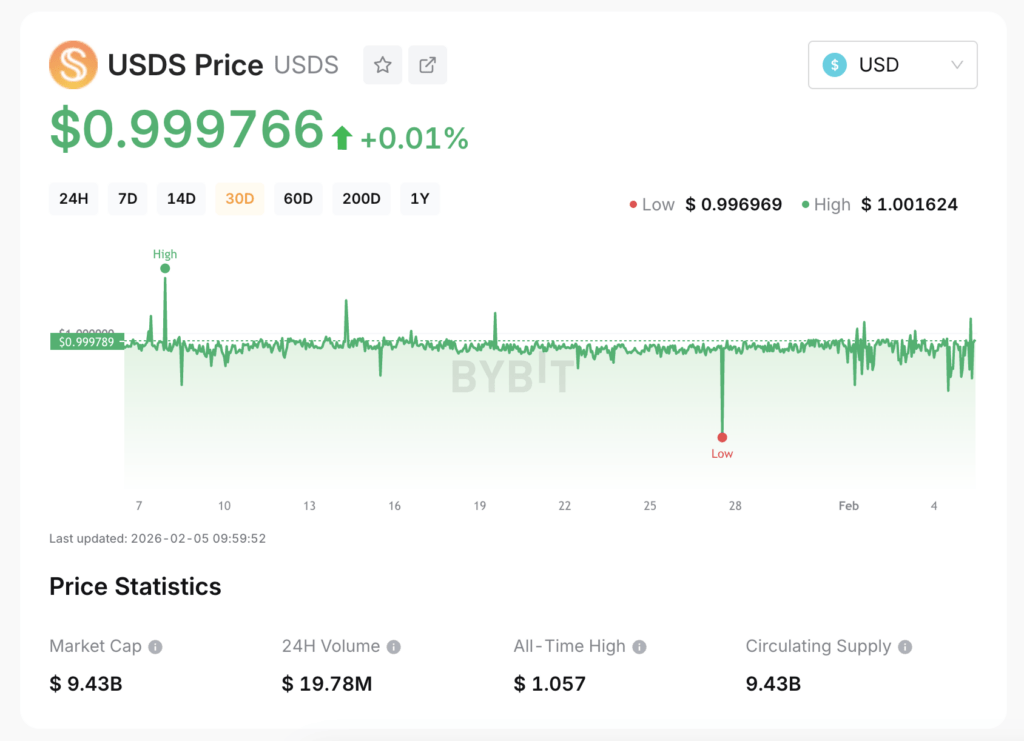
If you have spent any time tracking the mechanics of top decentralized stablecoins like USDS (formerly DAI), you have probably read something about these fees.
To newcomers, they may look like a standard interest rate. However, from a structural standpoint, they are a sophisticated tool designed to keep these tokens pegged at $1.00.
Let’s break down the fundamental and macroeconomic factors that make stability fees a necessity in modern finance.
The Core Concept: More Than Just Interest
In the traditional banking world, you pay interest to a bank in exchange for borrowing their capital.
In the world of decentralized stablecoins, you aren’t exactly “borrowing” from a company. Instead, you are minting new currency into existence by locking up collateral (like Ethereum) in a smart contract.
The stability fee is a variable percentage fee that is continuously charged on the amount of stablecoins you have minted.
Unlike a fixed-rate loan at a local bank, this fee is dynamic. It is a risk parameter governed by the protocol’s stakeholders (like MKR token holders in the MakerDAO/Sky ecosystem) to ensure the stablecoin’s supply matches the market’s demand at all times.
Why Were Stability Fees Created?
The primary reason stability fees exist is to act as a monetary lever. In the absence of “policy tools” to influence the circulating supply of the decentralized stablecoin, the market would eventually face a “de-peg” event. This means that the token will trade at $0.98 or $1.02 instead of its intended $1.00 fixed price.
1. Regulating Supply and Demand
| Action | Market Condition | Intended Result |
|---|---|---|
| Increase Fee | Stablecoin trades below $1.00 | Supply contracts; Price rises |
| Decrease Fee | Stablecoin trades above $1.00 | Supply expands; Price falls |
| Tiered Fees | High volatility in collateral | Compensates for liquidation risk |
The price of any asset, including stablecoins, is a function of supply and demand.
- If the price is > $1.00: There is too much demand and not enough supply. The protocol is designed to lower the stability fee to make minting cheaper, encouraging users to create more coins and sell them to the open market.
- If the price is < $1.00: There is too much supply. The protocol then raises the stability fee, making it expensive to keep positions open. This creates an incentive for users to “burn” (repay) their stablecoins to close their outstanding debt, effectively removing supply and pushing the price back up to $1.00.
2. Risk Management
Every asset used as collateral has a different risk profile. Ethereum is more volatile than a tokenized U.S. Treasury bill. Stability fees allow a protocol to charge a “risk premium.” By establishing higher fees for more volatile collateral, the protocol ensures it is compensated for the higher risk it has assumed in case of a liquidation event during a market crash.
How Protocols Use Stability Fees: A Macro View
Protocols use these fees as a decentralized version of the Federal Reserve’s “Federal Funds Rate.”
The Governance Process
Most major protocols use a combination of automated “stabilization modules” and community governance.
When market data shows a consistent trend – such as ETH futures open interest rising while the stablecoin peg slips – governance participants vote to adjust the stability fee.
Where Does the Money Go?
A common question from new users is: “Who gets the fee?” In most decentralized systems, the fees collected serve two purposes:
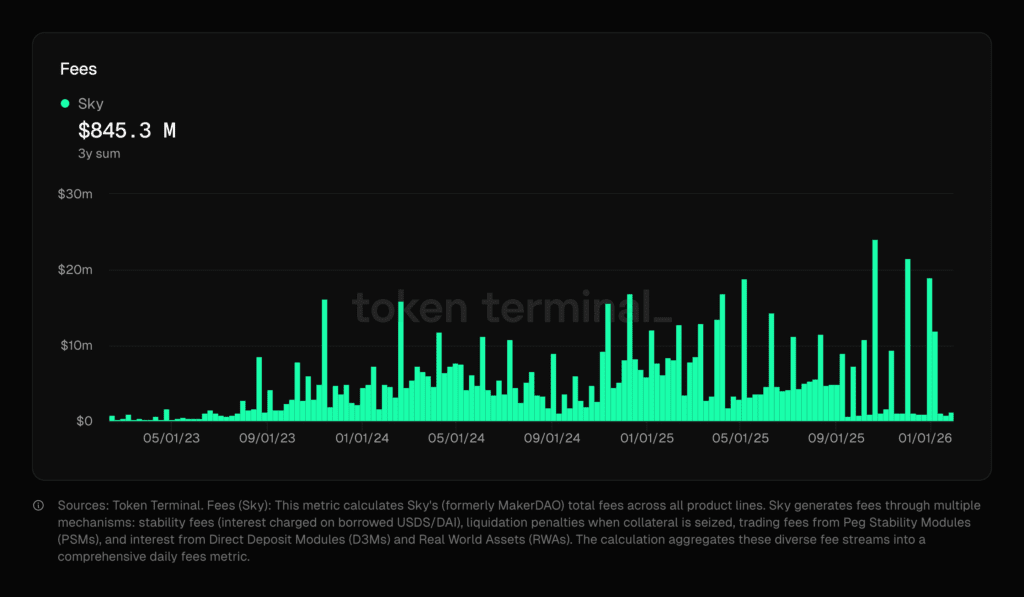
- Protocol Sustainability: Funding the activities of the development team and risk researchers who keep the system stable and running.
- Surplus Buffer: Fees are often stored in a “buffer” to cover potential losses if the collateral’s value drops too fast to be liquidated.
- Token Burn: In some models, the fees are used to buy back and “burn” the protocol’s governance token, theoretically adding value to long-term holders.
Stability Fees vs. Traditional Interest Rates
While they share similarities, the macroeconomic impact of a stability fee is unique to the blockchain.
Continuous Compounding
Stability fees are typically calculated per second. Although the rate is expressed as an annual percentage (e.g., 5% APY), the smart contract updates your debt balance in real-time. This means you don’t get a “monthly bill”. Instead, your total debt grows by a fraction of a cent every few seconds.
No “Maturity” Date
Unlike a traditional loan that must be paid back in 3 or 5 years, most stablecoin vaults have no expiration. As long as your collateral value remains high enough to avoid liquidation, you can keep your position open indefinitely, paying the stability fee as you go.
Final Thoughts for Investors
Understanding stability fees is the key to mastering “passive income” in crypto. If you are minting stablecoins to buy more ETH (leveraging), the stability fee is your cost of carry.
If that fee is 8% but you expect that ETH will rise to 47% (as it has in some instances in just a month), that trade makes sense. However, if the market goes sideways, that stability fee will slowly eat into your principal.